During the 18th century, a popular form of theater that was loved by many in Italy and soon popularized throughout Europe was commedia dell’arte. This form of theater was produced through ensemble acting which is a style of theater performance that focuses collectively on multiple actors working together to create a story rather than an individual performance.
Additionally, commedia dell’arte is centered around improvised comedy which is created through the use of the characters acting, emotion, scripted dialogue, costumes, and many more elements.
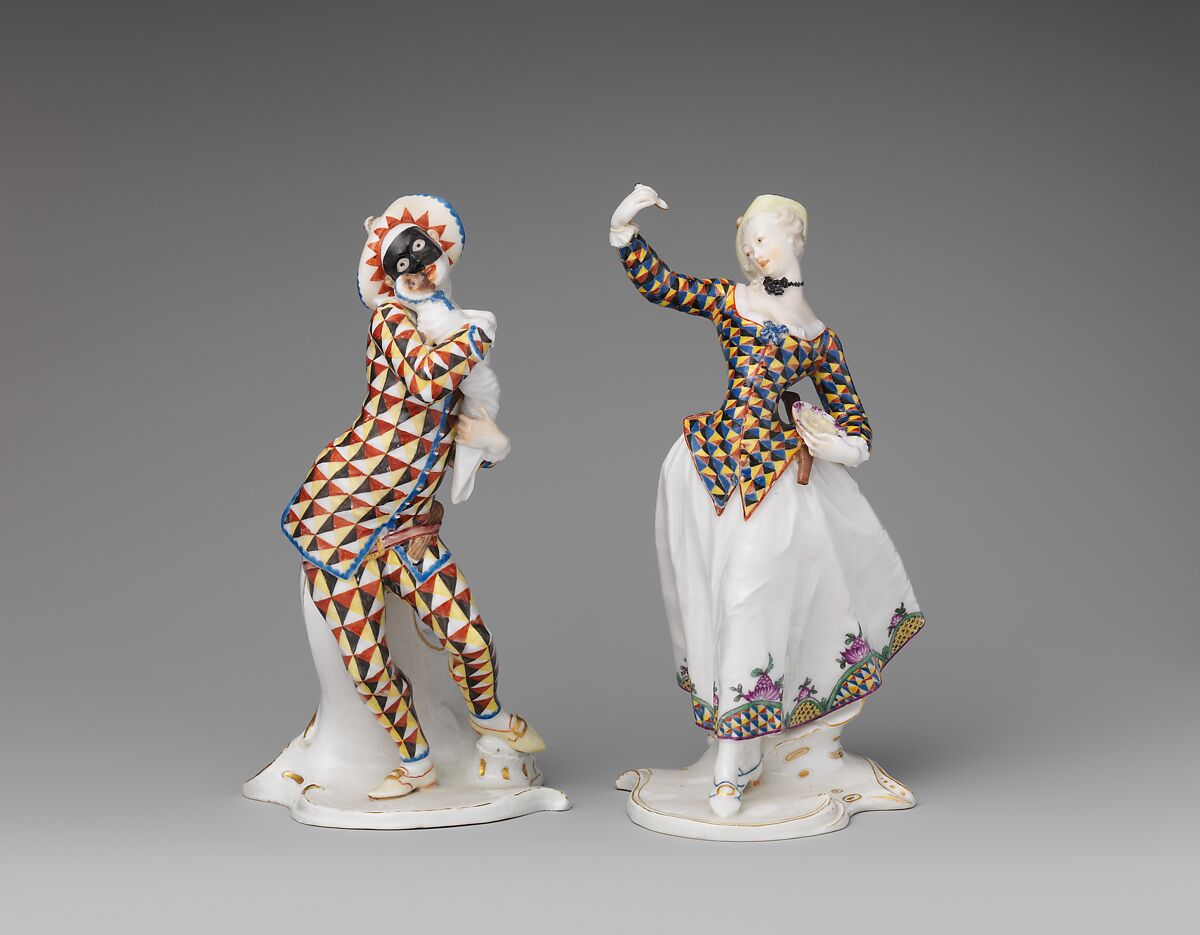
This image depicts a porcelain figure of Harlequin who is a well-known character in commedia dell’arte theater along with many others. Alongside portrays a female figure opposite of Harlequin, which is Harlequina who resembles similar qualities regarding costume appearance. The porcelain figures represent one of the main ideas in this form of theater which is characters expressing themselves through their facial expressions, actions, and body language. The exaggerated poses and facial expressions are how characters created humor and drew the audience’s attention during this time of theater.
There are many different abbreviations when depicting Harlequin, but all revolve around the same features such as colorful checkered diamond costumes, colorful tights, and a mask which help to enhance the characters physical and emotional appearance because instead of using more of their face to emphasize humor and emotion they showcase this through other forms of expression.
Source: https://www.metmuseum.org/art/collection/search/206046https://www.metmuseum.org/art/collection/search/206046
Artist: Franz Anton Bustelli (Swiss, Locarno ca. 1720–1763 Munich)
Collection: The Met
Rights: Public Domian


Great entry. You do a wonderful job describing in detail the physical appearance of the figure of Harlequin while connecting this character type to the artistic style of Italian theater in the eighteenth century!