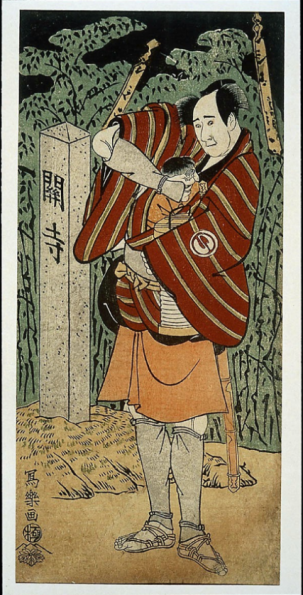
Kabuki theater was a popular form of entertainment during the Edo period and is one of Japan’s most esteemed forms of theater. Kabuki performances were recognized for their exaggerated and motions and eye catching costumes and make up, as the actors would make a lot of the details including their props and outfits almost comically… Continue reading Entry By Alan Vara: Kabuki Actor Sawamura Sojuro III as Kuhaku Saburo
Posts
Entry by Noushin Khan: Opera House,1809
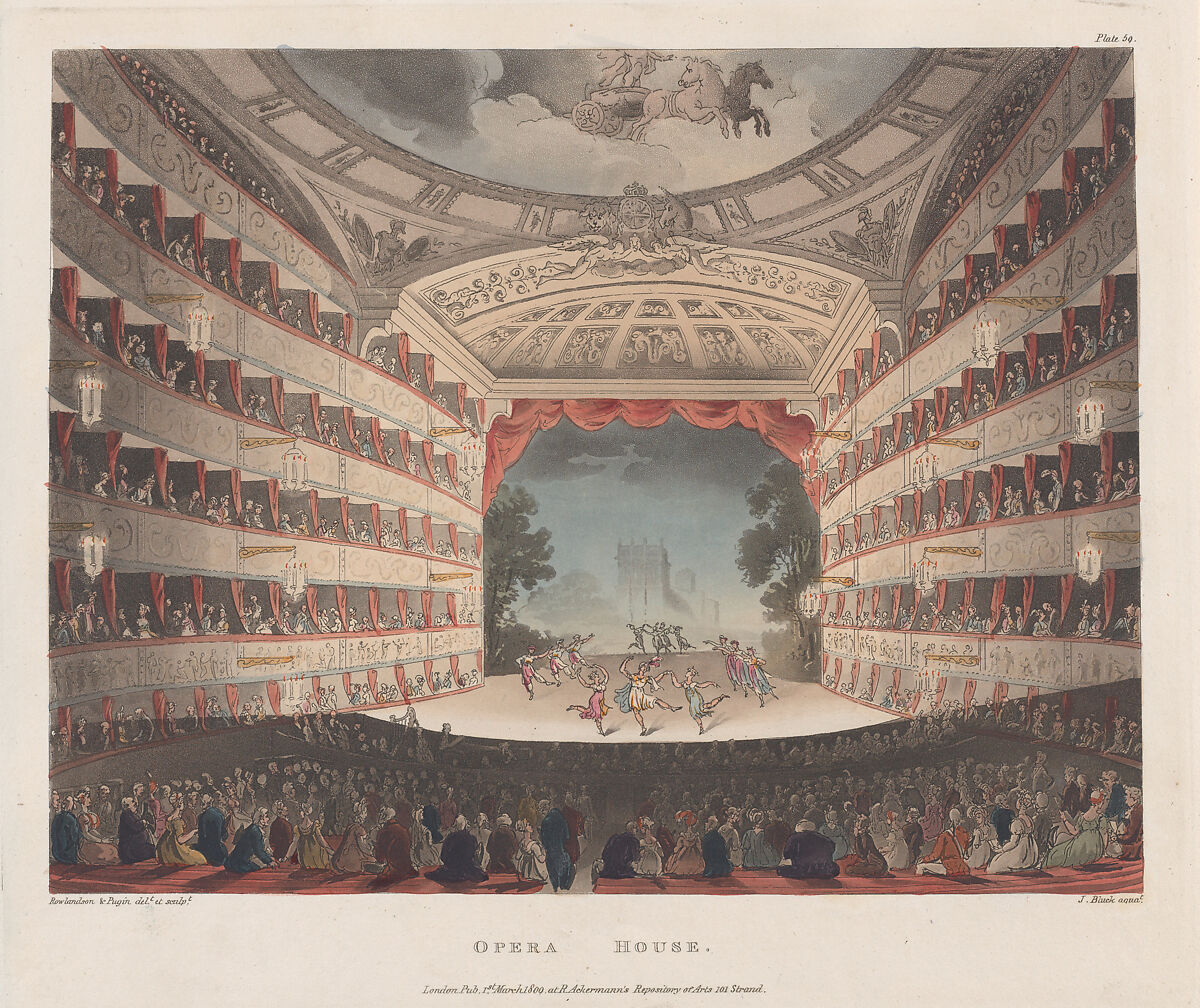
During the 18th century, various forms of art such as theatre, opera, and ballet were widely appreciated during this time period especially in London. London is known to be home for many beautiful and famous theaters, one being “The Royal Opera House”. The theatre was built and opened up to the public in 1732 by… Continue reading Entry by Noushin Khan: Opera House,1809
Entry by Thant Zeya: Interior of the Comédie Française, A. Meunier, 18th Century
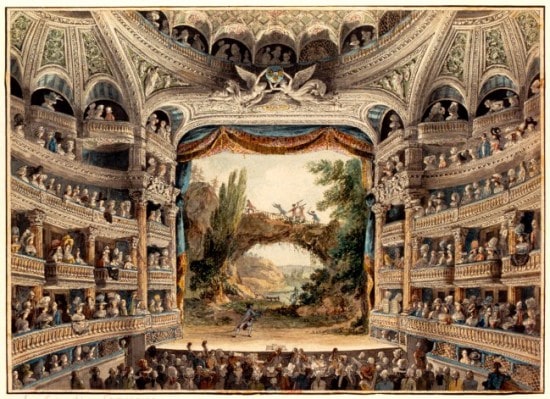
It was the glory of French playwriting when Molière was one of the most renowned and accomplished writers in theatrical history and had a significant impact on French culture through his theater plays. The Comédie Française was established in 1680 by King Louis XIV, following the death of Molière. Despite revolution, world wars and internal… Continue reading Entry by Thant Zeya: Interior of the Comédie Française, A. Meunier, 18th Century
Entry By Md Rafin: “Wait a moment”-[The actor Ichikawa Ebizō in a shibaraku role, 1796]
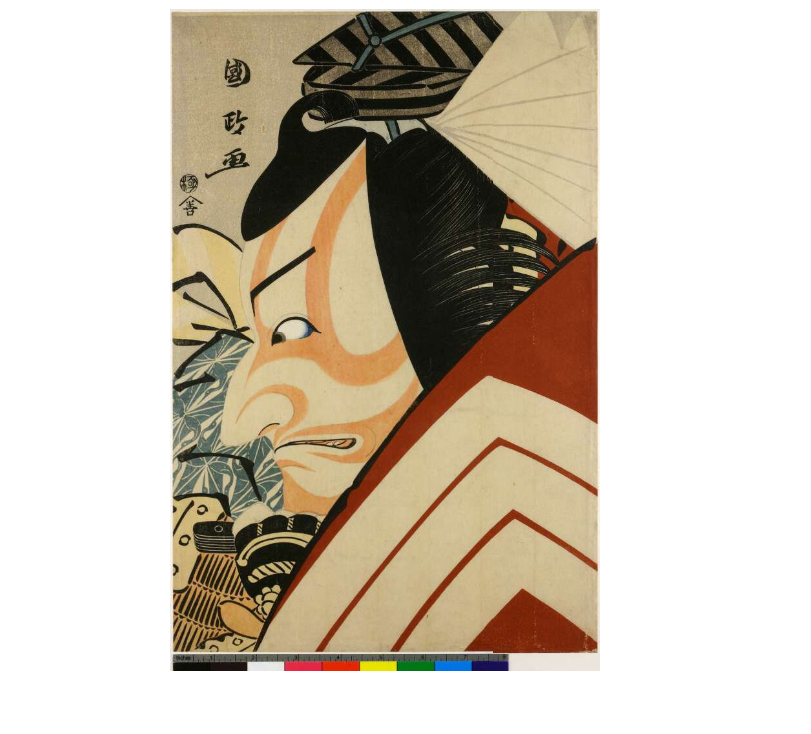
Kabuki Theatre is a traditional Japanese theater in which the performance is presented as art. Originating in the early 17th century, it has developed into a unique and highly stylized art that was loved by the people of Japan. The Kabuki Theatre involves intensive crafted clothes, eye-catching make-up, extravagant wigs, and, perhaps most crucially, the… Continue reading Entry By Md Rafin: “Wait a moment”-[The actor Ichikawa Ebizō in a shibaraku role, 1796]
Processional Cross
By Cynthia Balbi The cross is seen in the churches that dot the Christian kingdoms of the Northern Spain during the Middle Ages which is conveyed by this cross. It originates from a church, built in the eleventh century, fifty miles east of Oviedo. The meaning behind the cross is that the Rome that crucified Jesus has… Continue reading Processional Cross
Entry by Aneeza Shakeel: PUNCHINELLO FEEDING THE PEACOCKS BY GIOVANNI DOMENICO TIEPOLO
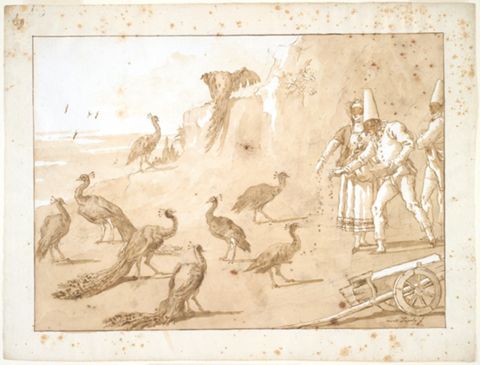
The “Punchinello feeding the peacocks” is a famous painting of 19th century by Giovanni Domenico Tiepolo. It is a 29.4 x 40.8 cm painting is an early 19th century painting and was made in Italy. This painting is one of Giovanni’s most famous paintings. Giovanni’s paintings and drawings holds both religious and secular approach. Punchinello,… Continue reading Entry by Aneeza Shakeel: PUNCHINELLO FEEDING THE PEACOCKS BY GIOVANNI DOMENICO TIEPOLO
Entry by Gianna Maurer “The Stranger, Theatre Royal, Dublin [Playbill for performance July 25, 1810]”
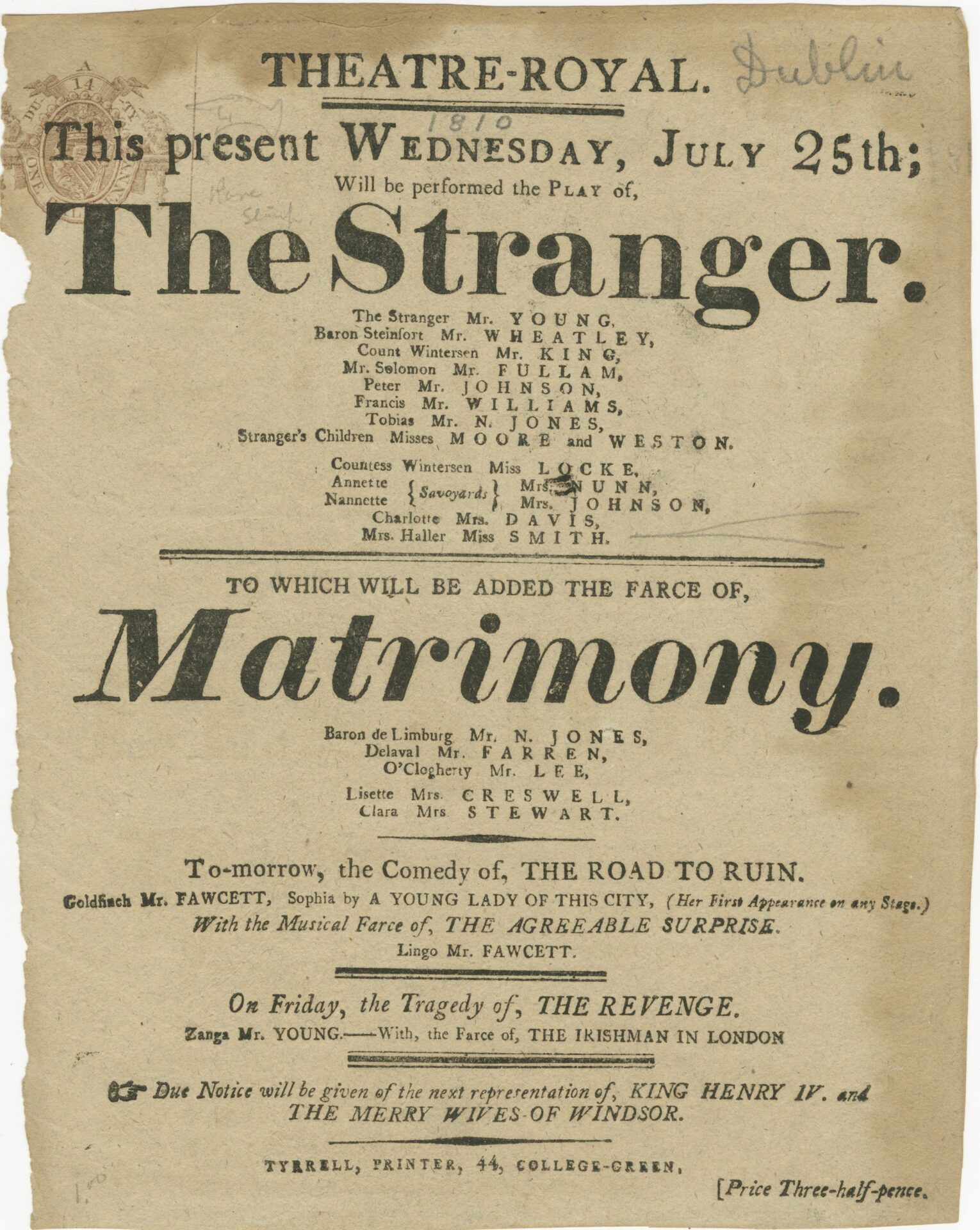
This playbill is from July 25th, 1810. It measures in at 25.8 x 20.5 cm. The playbill advertises the plays ‘The Stranger’ and ‘Matrimony’ performed at The Theatre Royal. The Theatre Royal was opened in the year 1788 by Spranger Barry in Dublin, Ireland. It was home to many, many beautiful productions, such as the… Continue reading Entry by Gianna Maurer “The Stranger, Theatre Royal, Dublin [Playbill for performance July 25, 1810]”
Entry by Jaiden Aguilar: Architecture of the “Teatro alla Scala”,1778
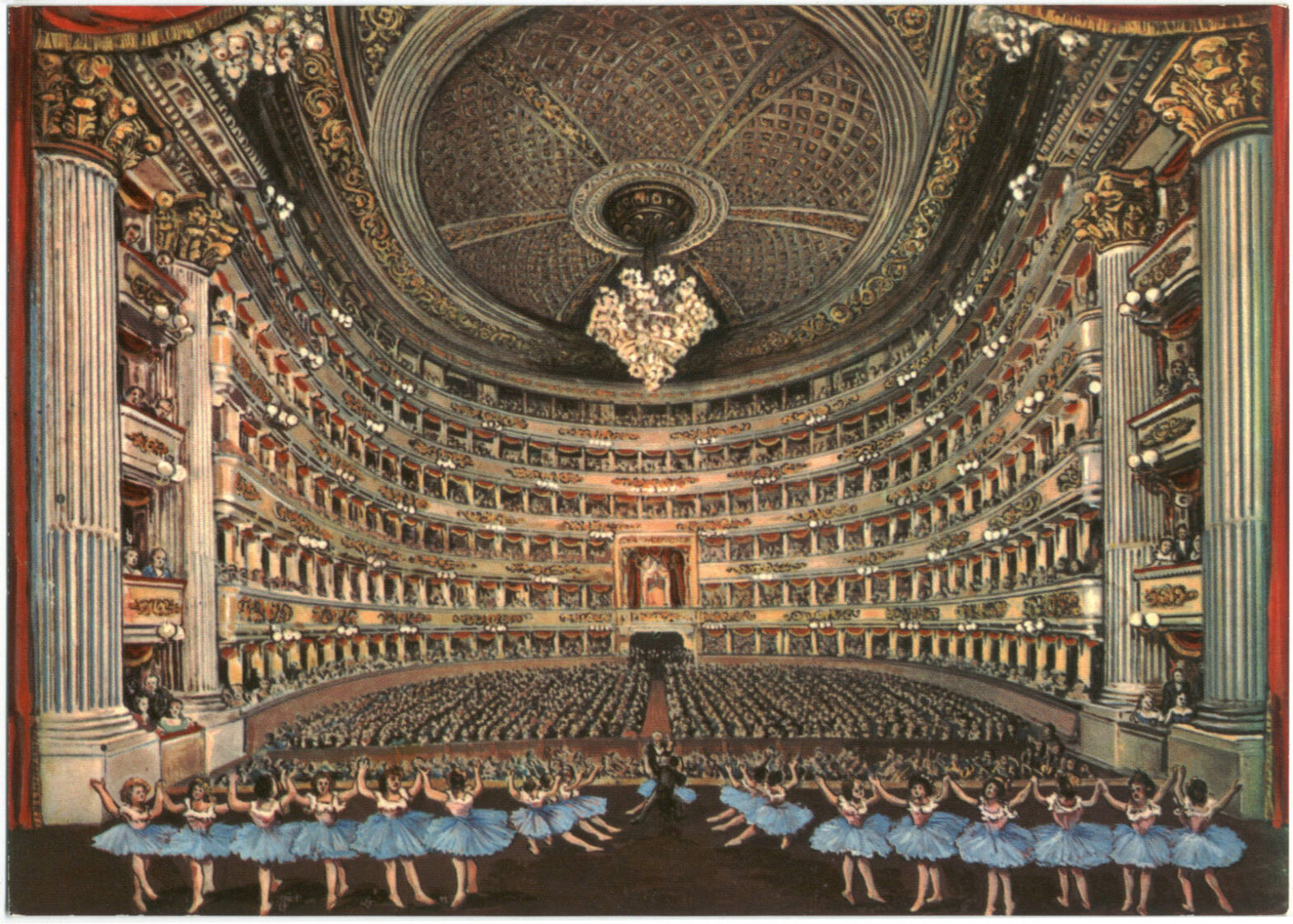
Founded in 1778, the Teatro alla Scala is a world-renowned opera house in Milan, Italy. It has hosted many of the greatest operatic performances over the last two centuries and is regarded as one of the world’s most prestigious and important theaters. Many of the greatest operatic performances of the last two centuries have taken… Continue reading Entry by Jaiden Aguilar: Architecture of the “Teatro alla Scala”,1778
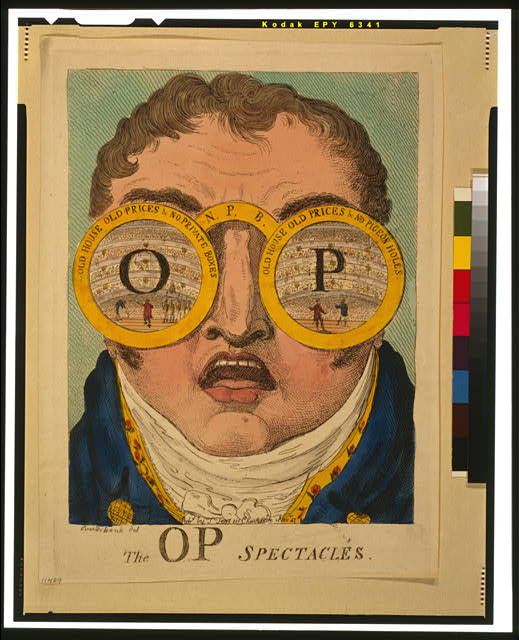
Entry by Sergio Garcia: The OP spectacles / Cruikshank del.
Entry by Mohammed Omor: Namban byobu (Southern Barbarians): The Arrival of a European Merchant Ship at Nagasaki
The Namban byobu (Southern Barbarians): The Arrival of a European Merchant Ship at Nagasaki is a famous Japanese folding screen that is believed to have been created in the early 17th century, during the Edo period. The term “Namban” stands for “Southern Barbarians.” It was used by the Japanese to refer to Europeans who arrived… Continue reading Entry by Mohammed Omor: Namban byobu (Southern Barbarians): The Arrival of a European Merchant Ship at Nagasaki

